





Workplace injuries can happen in many environments, including construction sites, warehouses, industrial facilities, healthcare settings, and other job locations throughout Sacramento. When an injury occurs on the job, workers often have immediate questions about medical treatment, time away from work, and how California’s workers’ compensation system applies to their situation.
Understanding how the claims process works can help make the next steps clearer. A Sacramento workers’ compensation lawyer can explain how workers’ compensation claims are filed, what benefits may be available under state law, and what procedural requirements may apply.
Our firm represents injured workers throughout Sacramento and surrounding areas in workers’ compensation matters, including claim filings, benefit delays & disputes, and proceedings before the Workers’ Compensation Appeals Board. We assist with required paperwork, deadlines, and communications involved in the process.
By handling the legal and procedural aspects of a workers’ compensation matter, we help clients stay informed about their rights and responsibilities under California workers’ compensation law.
We offer a free initial consultation to discuss your situation and explain the workers’ compensation process.
Your free case review begins with an intake call with our representative, who will gather basic information about your situation. If your matter appears qualified, an attorney from our firm may contact you to schedule a free consultation.
Representative Case Results

$225,000
Construction Accident

$175,000
Warehouse Accident

$150,000
Farming Accident

$75,000
Industrial Accident

Past results do not guarantee or predict future outcomes. Each case is different and depends on its specific facts and circumstances.
Why Injured Workers in Sacramento Choose the Law Office of Roy Yang
When your income and health are affected by a workplace injury, choosing the right lawyer matters. Our lawyers assist injured workers with navigating the workers’ compensation process, including claim preparation and procedural guidance.
Over 15 Years of Workers’ Comp Experience
Our lawyers have more than 15 years of experience representing injured workers in California workers’ compensation matters, including initial claims and appeals, depending on the facts of each case.
Sacramento-Based and Local to You
Our lawyers are based in the Sacramento and Capitol Corridor area and regularly handle workers’ compensation matters in the region. We are familiar with local procedures and participants within the workers’ compensation system, which can support clear communication throughout a case.
No Upfront Attorney Fees
Workers’ compensation cases are generally handled on a contingency fee basis. Attorney fees are not paid up front and are subject to approval under California workers’ compensation rules. Any fee and cost arrangements are discussed during the consultation.
Review and Representation for Denied or Delayed Claims
Some injured workers seek legal representation after a workers’ compensation claim has been denied or delayed. Our lawyers review claim documentation, identify procedural or evidentiary issues, and provide guidance on available options under California workers’ compensation law.
Call (888) 533-8703 or contact our office to request a free consultation.
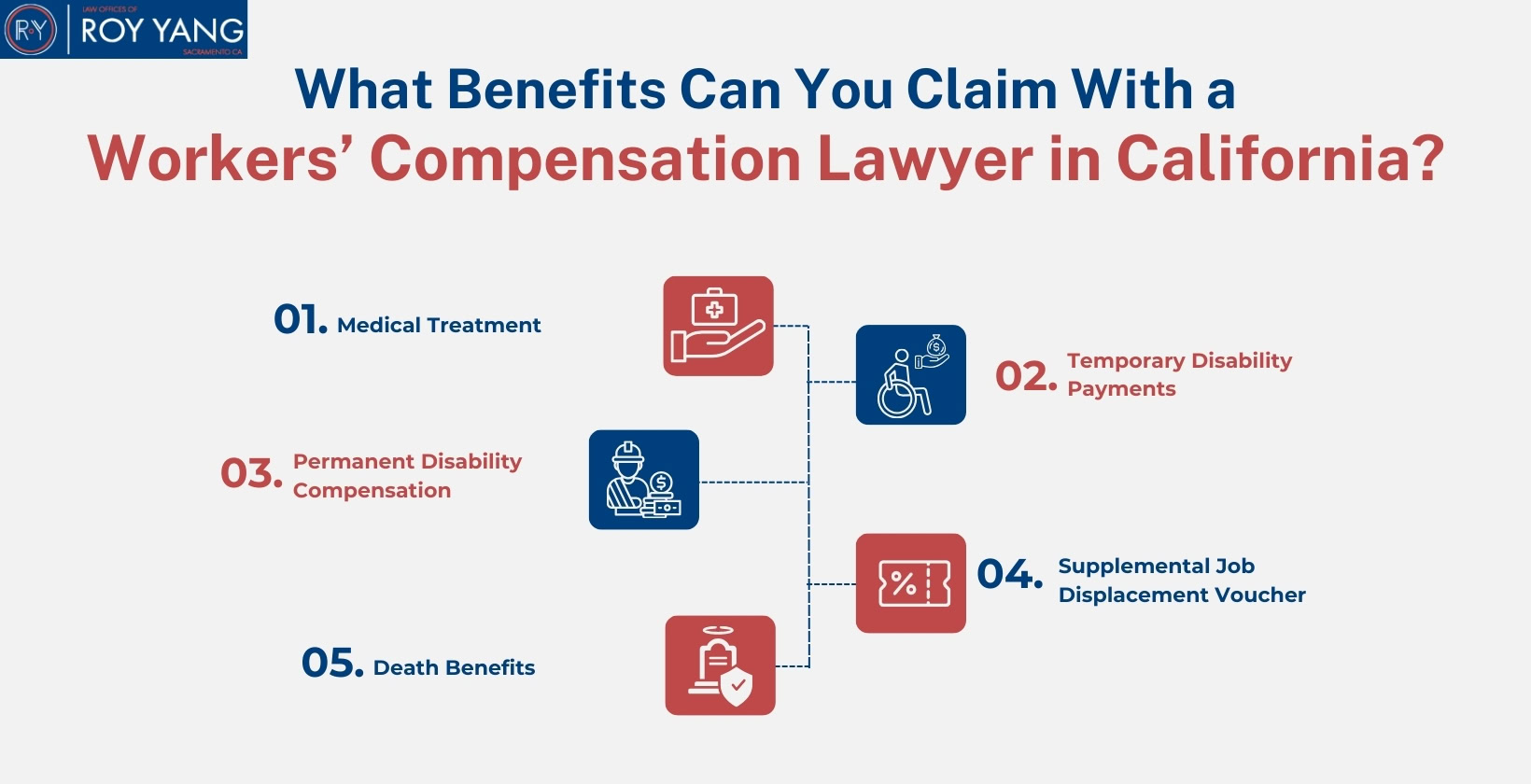
What Benefits Can You Claim With a Workers’ Compensation Lawyer in California?
After a work-related injury, California workers’ compensation benefits may help cover medical treatment and lost income. Eligibility and benefit types vary based on the circumstances of each claim. Our lawyers provide guidance through the workers’ compensation process and assist with required filings and deadlines.

Here are the 5 main types of California workers’ compensation benefits:
1. Medical Treatment
Medical treatment covers all necessary care for your work injury. This includes emergency care, diagnostics, surgery, rehabilitation, therapy, prescriptions, and medical equipment. Treatment must be approved and delivered through a certified provider within your employer’s Medical Provider Network.
2. Temporary Disability Payments
Temporary disability replaces lost income while you recover from a work-related injury. You receive two-thirds of your average weekly wages, up to the legal cap set by the California Division of Workers’ Compensation. Payments begin within 14 days of claim approval.
3. Permanent Disability Compensation
Permanent disability pays compensation when your injury causes lasting physical or mental impairment. The amount depends on medical ratings, your ability to return to work, your job classification, and your age at the time of injury.
4. Supplemental Job Displacement Voucher
The job displacement voucher provides retraining if you cannot return to your old job. This benefit covers up to $5,000 in costs for state-approved programs, certifications, or community college courses.
5. Death Benefits
Death benefits compensate dependents of workers who die from job-related injuries. Workers compensation death benefits include funeral expenses (up to $10,000) and ongoing payments to a spouse, children, or other qualified dependents.
Each California workers’ comp benefit requires documentation, medical evidence, and timely filing. The Law Offices of Roy Yang prepares these materials for Sacramento workers to secure full compensation without delay.

Workers’ Compensation by Injury Type
Workers’ compensation claims in California can vary depending on the type of injury, its severity, and how it affects an employee’s ability to work. Our experienced Sacramento Workers Compensation lawyers assist injured workers with understanding how different injuries are addressed under the workers’ compensation system and with navigating the claims process based on individual circumstances.
Back and Lifting Injuries
Back injuries are common among Sacramento workers in jobs that require lifting, bending, or twisting. Herniated discs, lower back strain, and spinal compression are some of the most frequently reported issues in these cases.

Falls, Crush Injuries, and Ladder Accidents
Falls from ladders, platforms, or uneven surfaces often lead to serious workplace injuries. We handle cases involving broken bones, head trauma, and crush injuries from heavy machinery or objects.

Repetitive Strain and Carpal Tunnel
Repetitive tasks can wear down joints and muscles over time. Many Sacramento workers develop carpal tunnel, tendonitis, or joint inflammation from daily job activities.
Burns, Toxic Exposure, and Electrocution
We represent workers exposed to hazardous materials, electrical currents, or unsafe work conditions. These injuries may require long-term care and extensive recovery support.
Stress-Related Injuries (Anxiety, PTSD)
Work-related stress can take a toll on mental health. We handle claims involving trauma, anxiety, and PTSD caused by job-related incidents or environments.
What to Do After a Workplace Injury in Sacramento
What you do after a work injury can directly impact your benefits and legal rights. These first steps help protect your health, support your claim, and avoid problems down the line. Here’s what we recommend you do right away:
Report the Injury to Your Employer
Inform your supervisor about the injury as soon as possible, preferably the same day. Reporting quickly protects your claim and creates an official injury record.
Submit the DWC-1 Form
Your employer must give you a DWC-1 claim form after you report the injury. Fill it out completely and return it to them to start your workers’ compensation claim.

Seek Medical Treatment From an Approved Provider
If your employer has a Medical Provider Network (MPN), you must see a doctor within that network to begin your workers’ compensation treatment. Don’t delay care. Getting immediate medical attention not only protects your health, but it also strengthens your claim by documenting your injury early.
Failing to seek timely treatment or using an unauthorized provider can delay benefits and give the insurance company grounds to dispute your case.
Keep Written Records and Timelines
Save everything: medical notes, emails, forms, and any messages from your employer or insurance. These records often become key evidence if your claim is delayed or denied.
Contact a Workers' Compensation Lawyer Early
Speaking with a Sacramento workers’ compensation lawyer early can help clarify procedural requirements and address questions about your workers’ comp claims process.

Hear What Our Clients Say
Workers’ Compensation in Different Industries
Each industry presents unique risks for workers. Understanding common claims helps injured workers recognize their rights and options.
Injuries often result from falls, equipment accidents, and physical trauma.
Slip and Fall Accidents
Incidents causing fractures, head trauma, or other serious injuries.
Public Safety and Emergency Services
Injuries sustained by first responders like firefighters, police officers, and paramedics in the line of duty.
Industrial and Manufacturing Injuries
Injuries due to machinery hazards or chemical exposure, often leading to disabilities.
Office-Related Injuries
Injuries from slips, stress, or workplace harassment.
Workers injured in these settings may be entitled to compensation for medical expenses, lost wages, and other related costs.
How to File a Workers' Comp Claim?
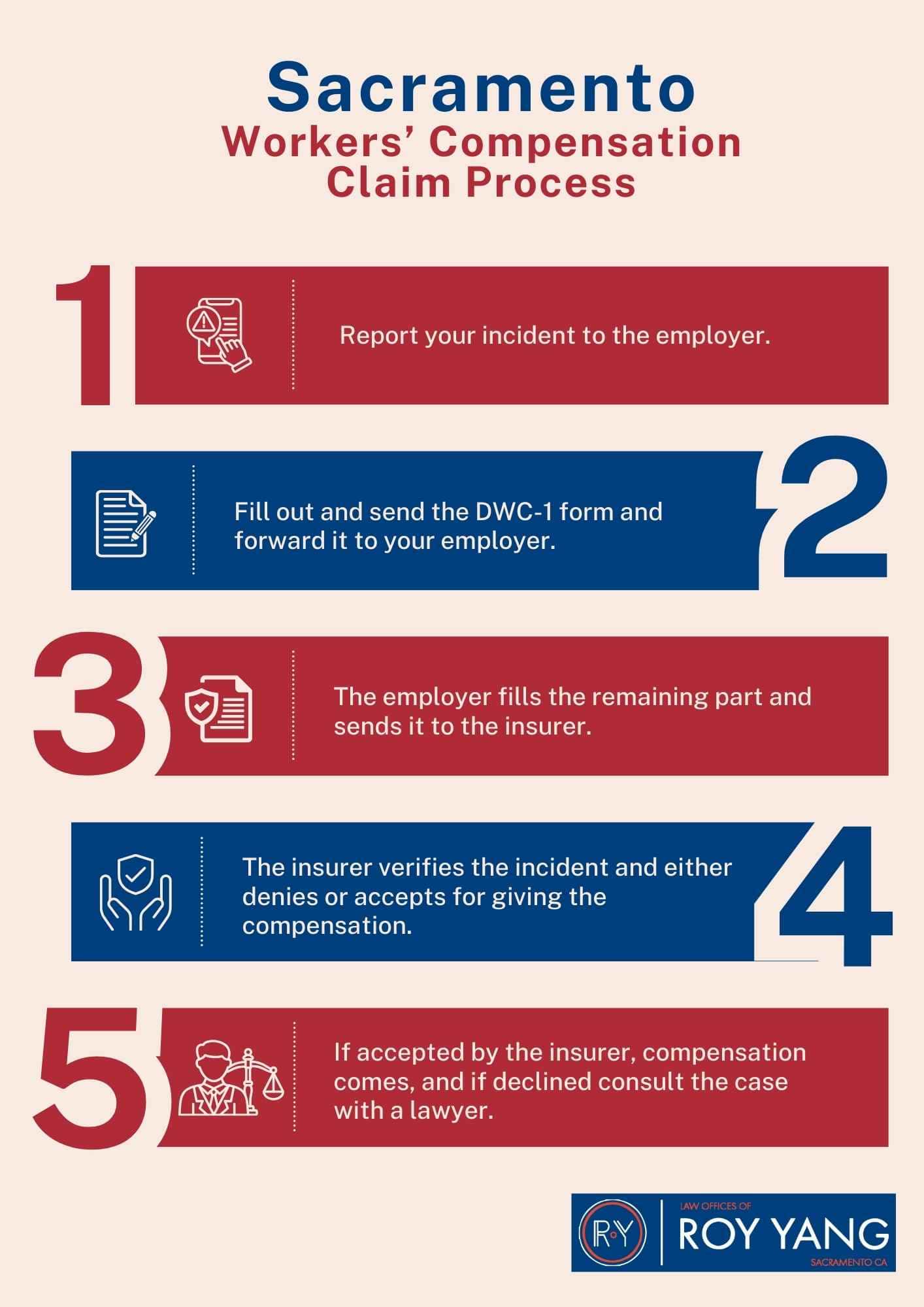
Filing a workers’ compensation claim may seem overwhelming, but following these steps will guide you through the process:
- Report Your Incident to Employer: Immediately notify your employer about the injury. This is the first step in the workers’ comp process.
- Fill Out and Send DWC-1 Form and Forward to Your Employer: After reporting the injury, you will need to complete the DWC-1 Claim Form. Ensure all details are accurate, then send the form to your employer.
- The Employer Fills the Remaining Part and Sends it to the Insurer: Your employer will complete the rest of the form and forward it to the insurance provider for review.
- The Insurer Verifies the Incident and Either Denies or Accepts for Giving the Compensation: The insurance company will review the claim, verify the incident, and decide whether to approve or deny compensation.
- If Accepted by the Insurer, Compensation Comes, and If Declined, Consult the Case with a Lawyer: If the insurer accepts your claim, compensation will be provided. If the claim is denied, it’s recommended to consult a lawyer to discuss your options.
How the Workers’ Compensation Process Works in California
Understanding the process can help you confidently navigate your claim. Here’s how it works from start to finish:
- Filing and Case Initiation: After you report your injury and submit the DWC-1 form, the insurance company reviews your claim and decides whether to accept or deny it.
- Role of Employers and Insurers: Your employer submits the injury report to the insurance carrier, which administers the claim and evaluates benefit issues and often coordinates authorized medical treatment as required by law.
- Common Delays or Denials: Claims can be delayed or denied due to paperwork issues, disputes, or medical reviews. If your workers’ compensation claim is denied, we provide guidance on available options and procedural next steps under California law.
- Timeline of a Typical Claim: When a claim is accepted, certain benefits may begin within timeframes established by California workers’ compensation regulations. If there is a delay, we assist with addressing procedural issues related to the claim process.
- Why Legal Representation Matters: Insurance companies have legal teams to protect their interests. Legal representation can help with understanding procedural requirements, completing required paperwork, and navigating the workers’ compensation process.
Mistakes to Avoid While Filing Worker's Compensation
Filing a workers’ compensation claim can be confusing, and small mistakes can delay or even jeopardize your claim. Here are some common pitfalls to avoid:
- Not Reporting the Injury Immediately: Delays in notifying your employer can result in denying your claim. Report your injury as soon as it occurs.
- Failing to Follow Medical Instructions: Not following your doctor’s orders or not going to the appointments can weaken your case and affect your eligibility for benefits.
- Not Keeping Detailed Records: Track all medical visits, lost wages, and other injury-related expenses. Comprehensive documentation strengthens your claim.
- Not Seeking Legal Help Early: Waiting too long to consult an attorney can limit your options and compromise your chances of receiving fair compensation.
How Is Workers Comp Calculated?
Once your workers’ compensation claim is approved, it’s time to calculate workers comp. Here’s how payment determinations are made:
- Average Weekly Wage (AWW): Your benefits are primarily based on your average weekly earnings. The California workers compensation average weekly wage calculation determines this amount using your income over the 12 months before your injury.
- Temporary Disability Benefits: If you’re temporarily unable to work, you’ll generally receive two-thirds of your AWW, subject to state-mandated limits. If you can work part-time or in a limited capacity, your benefits may be adjusted accordingly.
- Permanent Disability Benefits: For injuries that result in permanent disability, benefits are calculated based on factors such as the severity of your condition, your age, and your occupation. A doctor’s impairment rating plays a crucial role in determining the amount.
- Medical Expenses: Workers’ compensation fully covers all necessary treatments for your injury, including surgeries, medications, and physical therapy.
If you believe your payments are incorrect or have questions about calculating them, contact a Sacramento workers compensation lawyers for guidance and support.
Call our office at (888)-533-8703 or fill out our contact form to request a free initial consultation with our workers’ compensation lawyer in Sacramento.
Speak With a Sacramento Workers’ Compensation Lawyer Today
You do not need to handle your workers’ comp case alone. Whether you are filing for the first time, recovering from an injury, or facing a denied claim, the Law Office of Roy Yang is here to help.
Our Sacramento-based workers’ compensation lawyers assist with understanding procedural requirements, answering questions, and addressing paperwork and claim-related issues throughout the process.
Get expert help with a Sacramento Workers Compensation Lawyer. We assist injured California workers with claims, paperwork, and benefits.
Call (888) 975-2889 to request a free consultation.
Additional Resources for Workers' Compensation
- What is workers compensation?
- Federal vs. State Workers' Compensation Programs
- Workers' compensation rules by state
- Workers' comp remedy laws
- How is workers comp calculated?
- How long does temporary total disability last?
- How long does workers comp settlement take?
- Workers comp appeal
- Can you collect workers' comp after being fired?
- Can you terminate an employee while on workers' comp in California
- Can I sue workers comp for pain and suffering?
- Is workmans comp taxable?
FAQs: Workers Comp Attorney Sacramento
What is the main difference in personal injury vs. workers' comp?
The key difference in personal injury vs workers comp lies in fault. A personal injury claim requires proving another party’s negligence to recover damages, including pain and suffering. In contrast, workers’ comp is a no-fault system for on-the-job injuries that provides set benefits but excludes pain and suffering.
Do you need workers' comp for remote employees?
Yes, employers must provide workers’ comp coverage for remote employees if they are regular staff, not contractors.
How does workers' comp work for remote employees?
Workers’ comp works for remote employees by covering injuries or illnesses that happen while they are performing job-related tasks at home. The process involves reporting the injury, filing a claim, and receiving approved medical and wage replacement benefits once the claim is verified.
What is the 90-day rule for workers' comp in California?
The 90-day rule for workers’ comp in California applies if the employer or their insurance company does not formally accept or deny a claim within 90 days of the claim form being filed. In such cases, the injury is presumed to be work-related.
How long after a workers' comp settlement do I get paid in California?
You can get paid workers’ compensation settlement payment within 30 to 60 days after the settlement agreement is finalized and all parties have signed it in California.
How long does an employer have to hold a job for someone on workers' compensation?
According to the California Family Rights Act (CFRA), an employer is required to hold your job for up to 12 weeks while you are on approved leave.
How much does a workers' compensation lawyer cost?
Workers’ compensation lawyer fees are based on a contingency fee basis. Lawyers take a percentage of your recovery, so you don’t pay upfront or out-of-pocket for their time.
Know your rights, secure benefits, get treatment, and protect your family’s future. We’re here to help. Contact us.
"(Required)" indicates required fields