


After an on-the-job injury, you deserve clear guidance, reliable support, and a process that helps you move forward with confidence. Navigating medical care, benefits, and paperwork becomes much easier when you have a professional who understands California’s workers’ compensation system standing beside you.
A skilled Sacramento workers’ compensation attorney strengthens your claim, communicates with insurers, and helps secure the benefits and care you need for a smooth recovery. With the right legal partner, your case gains direction, clarity, and momentum.
Whether you’re beginning your claim or preparing for the next step, this guide will show you how to choose a workers’ compensation lawyer by highlighting key qualities, strengths, and factors that help you select an attorney who is dedicated, experienced, and the right fit for your journey.
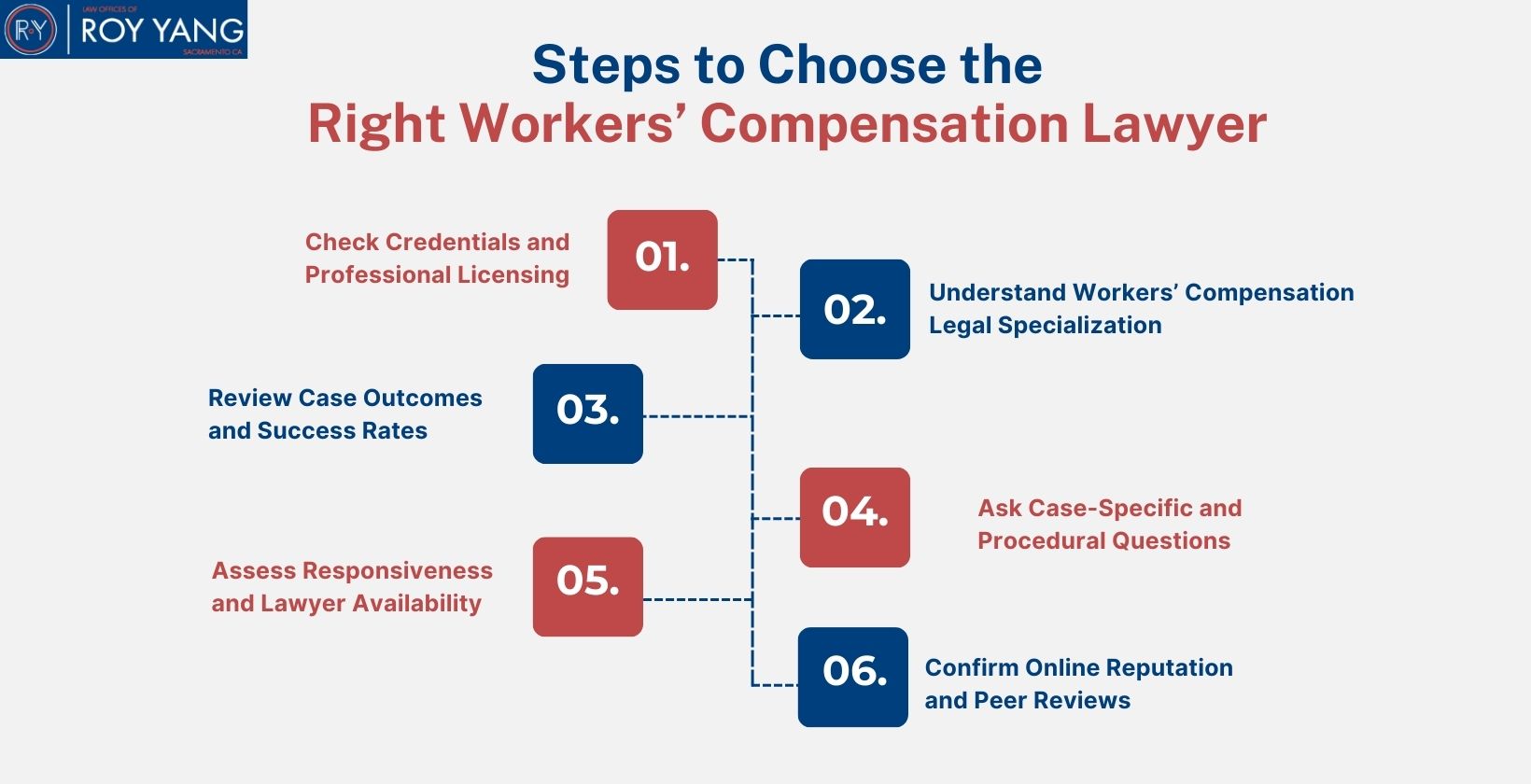
Steps to Choose the Right Workers’ Compensation Lawyer
Choosing the right legal help starts with background research, then moves to a one-on-one conversation. The steps ahead break down what to check, what to ask, and what really matters when you’re comparing lawyers for your workplace injury claim.
1. Check Credentials and Professional Licensing
Begin with the basic license check. Every workers’ comp lawyer must be licensed to practice in California. To verify, use the California State Bar attorney lookup. Upon submitting the lawyer’s full name, you’ll see their license status, bar number, and how long they’ve been practicing. If anything’s missing, unclear, or marked as “inactive,” that’s a red flag.
2. Understand Workers’ Compensation Legal Specialization
While a lawyer’s license tells you that they are capable of practicing, their track record tells you if they’re good at it. Find out how many workers’ comp cases they’ve handled. Focus on results in tough situations, such as denied claims, trials, and high-value injuries. That’s where real experience shows up.
Signs of what a strong track record looks like:
- Won benefits on a claim insurance company initially denied
- Represented injured workers in trial hearings
- Recovered the best possible settlements for disability or complex medical conditions
If they hesitate, dodge the question, or talk only in generalities, move on.
4. Ask Case-Specific and Procedural Questions
Asking the right questions up front sets the tone for everything that follows. It helps establish trust, assess their attentiveness, and confirm their experience with cases like yours. You should ask most of these during a free consultation.
Here’s a list of a few smart questions to ask for clarity:
| Category | Questions to Ask |
|---|---|
| About experience and specialization |
Have you handled cases involving my type of injury? How often do you deal with denied or delayed claims? What percentage of your current and past caseload is strictly dedicated to California Workers' Compensation? |
| About communication |
Will I be talking directly with you, or mostly with a paralegal? How long does it usually take to hear back if I call or email? Do you send regular updates, or only reach out when something major happens? |
| About fees and process |
Do you work on a contingency fee basis? If so, how much do you charge? Are there any upfront or out-of-pocket expenses I should expect? If I switch lawyers later, how does that affect fees? |
A lawyer who knows this work will answer clearly and without hesitation. If they seem rushed, vague, or sidestep the question, take note.
5. Assess Responsiveness and Lawyer Availability
Most complaints we hear from injured workers aren’t about legal strategy. They’re about silence, missed calls, and no or slow updates. You need a lawyer who actually makes time for your case. That means quick responses, clear answers, and some way to reach them (or their team) directly without having to route through multiple assistants.
Assess how fast they respond when you first reach out. If it takes a week to get a call back after your initial inquiry, expect more of the same later.
6. Confirm Online Reputation and Peer Reviews
Before you commit, take time to search the lawyer’s name or law firm online. Compare patterns, such as what past clients say, the way they handle feedback, and how other lawyers rate their work.
Use sites like Avvo and Super Lawyers to view client reviews, peer endorsements, and discipline history. These trusted platforms highlight recognized attorneys based on experience and reputation.
Do not be persuaded solely by five stars. Evaluate the tone of the reviews. Is the praise specific and relevant to your case? Are the complaints about things that would affect you, too?
Key Factors When Choosing a California Workers’ Comp Lawyer
Once you’ve gone through the basics of license, reputation, and responsiveness, it’s time to scan deeper. Because what really moves a case forward in California is knowing the system, the judges, and the insurance companies.
Evaluate these factors to separate average law practitioners from real lawyers who know how to get real results.
Familiarity With WCAB Boards and California Work Comp Law
Workers’ compensation claims in California are handled through the Workers’ Compensation Appeals Board (WCAB), and each regional WCAB office has its own judges, venue-specific rules, and regional issues.
A lawyer who regularly appears at your local WCAB has a working understanding of how that system runs. That kind of familiarity can move your case faster and make outcomes more predictable. When you consult an attorney, ask questions that address their frequency of WCAB appearances and familiarity with the workers’ compensation appeal procedures.
Experience Handling Denied Claims and Complex Injuries
Complex workplace injury claims, such as those involving cumulative stress injuries, mental health issues, or pre-existing conditions, are often tricky to prove. Insurers frequently deny or delay these claims. That’s where legal experience really matters.
Inquire how the lawyer handles denied cases. Have they appealed? Gone to trial? Negotiated settlements after denial? The answer tells you if they know how to fight, not just file.
Knowledge of QME/AME Processes and Report Disputes
In a disputed claim, your medical report becomes the center of everything. If the insurer disagrees with your doctor’s opinion, they’ll request a Qualified Medical Evaluation (QME) or an Agreed Medical Evaluation (AME). The QME/AME reports can determine your benefits.
A skilled workers’ comp lawyer knows how to challenge damaging reports, cross-examine biased doctors, and manage timelines. If the lawyer doesn’t know how the QME/AME system works in California, that’s a problem.
Legal Credentials Required for California Workers’ Comp Lawyers
Beyond showing a lawyer’s license status, legal credentials tell you how highly specialized they are in a certain area. Basically, two levels of qualification matter here. First, the attorney must be licensed with the California State Bar. Second, the strongest candidates go further and become certified as specialists in workers’ compensation law. Let’s break it down.
State Bar Certification Requirements for Workers’ Comp Lawyers
To represent injured workers effectively, attorneys need credentials that prove they understand this system inside and out.
At minimum, any workers’ comp lawyer must:
- Be actively licensed by the California State Bar
- Be in good standing with no record of suspension or disbarment
- Follow all rules under the California Labor Code and WCAB procedures
But that’s just the baseline. The stronger legal credentials come from certification and specialization.
Certified Legal Specialist vs. General Practice Attorney
The real difference is that a Certified Workers’ Compensation Specialist spends most of their time handling comp cases. A general practice attorney might take on a little bit of everything (e.g., injury claims, family law, criminal defense) but doesn’t go deep on any one area.
What specialization looks like in action:
| Certified Specialist | General Practice Attorney |
| Regularly appears before WCAB judges | May rarely step into a WCAB hearing room |
| Knows QME/AME rules and how to challenge bad medical reports | May rely on basic reports or miss deadlines |
| Familiar with venue-specific processes and judge preferences | May need time to “look things up” or ask around |
| Focused caseload on work injuries, denied claims, and appeals | Handles a variety of unrelated case types |
When your benefits depend on medical evidence, legal timelines, and WCAB procedures, you want a specialist who does this work every single day.
How to Research and Compare California Workers’ Comp Lawyers?
Once you’ve narrowed your list down to a few lawyers, don’t rush into hiring the first one who calls back. Comparing attorneys side by side, their credentials, reviews, results, and reputation can help you avoid costly mistakes later on.
This doesn’t require a law degree. You just need to know where to look and what to look for. In summary:
- Step 1: Use the California State Bar website and certified specialist directories.
- Step 2: Analyze client reviews, settlements, and disciplinary history on Avvo and Super Lawyers platforms.
- Step 3: Compare peer ratings and third-party legal rankings.
Essential Questions to Ask During Your Initial Consultation
That first consultation with a workers’ comp lawyer is more than just a quick case review or one-sided pitch. It’s your only chance to evaluate their suitability before signing anything. Before you decide to hire, here’s how to move through your questions and pay attention to their responses.
What to Ask About Case Strategy and Involvement?
After you give them specifics about your case, you want to know how this lawyer actually works cases. How hands-on they’ll be. What they do when a claim gets denied. Whether they’re just collecting paperwork or actually building strategy.
Here are questions that open up that conversation:
- How do you approach a claim like mine?
- Will you be personally handling my case?
- How involved are you after the initial filing?
- What’s your strategy if the claim is denied?
- Have you handled cases with similar injuries or complications?
How to Judge Clarity and Transparency in Communication?
Good communication is about how clearly a lawyer explains what’s happening with your case, what to expect next, and what could go wrong. Pay attention to how they answer your questions. Are they giving short, vague responses or walking you through it in plain terms? Are they managing expectations or sugarcoating everything?
Strong communication usually has signs like:
- Clear timelines for what happens next
- Direct contact details or ways to reach out
- Realistic answers about duration and benefits
- Written explanations when things change
If they’re hard to follow in a consultation, don’t expect it to get better once you’ve signed on.
Assessing Comfort Level With Legal Support Staff
The reality in most law offices is that most injured workers end up talking to the legal staff more than the attorney. When the staff treats you like a file number, forgets basic facts about your case, or leaves your questions unanswered, you risk your compensation.
To assess this comfort level with the staff, take notes of the following in your consultation:
- Are they respectful and easy to talk to?
- Do they seem organized and aware of your situation?
- Do they explain next steps clearly and without attitude?
If you feel rushed during intake or no one explains who’s handling what, it is a sign of a poor experience ahead.
Common Myths About Workers’ Comp Lawyers in California
A lot of injured workers wait too long to get legal help. It’s not because they don’t need it, but usually because they’ve been told they don’t. Some misconceptions can lead to missed deadlines, denied treatment, and serious setbacks.
Let’s clear up a few of the most common myths claimants believe:
| Myth | Reality |
|---|---|
| “Minor injuries don’t need a lawyer.” | Minor injuries often worsen. Insurance delays or return-to-work pressure can make things worse fast. If symptoms persist or treatment is slow, talk to a lawyer early. |
| “The insurance adjuster will handle everything fairly.” | Adjusters protect the company’s costs, not your recovery. They delay care, deny claims, and limit benefits. |
| “It’s just one form. I can file the claim myself.” | Filing a DWC-1 is only the beginning. One missed deadline or incomplete form can stall or sink your entire case. |
| “Hiring a lawyer will make everything more complicated.” | A good lawyer actually makes it easier. They handle paperwork, deadlines, hearings, and pushback when the insurer doesn’t. |
Why Communication and Language Access Matter When Choosing a Lawyer?
A lawyer can be skilled, experienced, and aggressive in court, but if they leave you in the dark, it doesn’t matter. Effective two-way communication and regular updates in an accessible language, all prevent loopholes in case progress.
Importance of Consistent Case Updates
Regular, timely updates throughout every stage of the claim are essential for more than one reason. Commitment to transparency assures clients that their case is a priority, helps manage their expectations, and keeps them fully informed of important deadlines and major developments.
Look for callbacks or replies within 24–48 hours, regular status updates, even if there are no big changes, and written timelines.
Confirm Spanish or Other Language Support for Clear Communication
Throughout your claim process, you’re required to sign legal documents, take medical-legal exams, or respond to formal notices. If your lawyer can’t communicate clearly with you in your primary language, that creates misunderstandings that can delay your benefits or block treatment entirely. Ask upfront if the office offers bilingual support to make sure you understand every detail of your case.
Solo Attorneys vs. Law Firms in Workers’ Comp Cases
The structure of the firm you choose can impact your experience. Some injured workers want personal contact with one attorney. Others prefer a larger team with more resources. Neither is wrong and depends on what matters most to you.
Advantages and Trade-Offs of Solo Lawyers
Choosing a solo workers’ comp attorney comes with clear benefits, but it may not always be the right fit for every case. Here’s a quick breakdown:
| Advantages | Trade-Offs |
|---|---|
| Direct access to the attorney handling your case | May have limited support staff for paperwork and follow-up |
| Faster decisions and no layers of approval | Less availability if handling multiple cases |
| One consistent point of contact throughout | Fewer resources for complex or heavily disputed claims |
Tip: For straightforward injuries, solo lawyers often offer more personal service. For denied claims, high-stakes cases, or QME disputes, ask how they manage the workload without a large team.
Risks of Case Delegation in High-Volume Law Firms
Larger firms mean multiple staff, more support, and a higher capacity to take on more cases at once. That can be a good thing, but it also means that many people may handle different parts of your claim.
This creates a few risks:
- Inconsistent communication if roles aren’t clearly defined
- Delays when staff members wait for attorney input
- Misunderstandings if no single person tracks your full case history
- Before hiring any law firm, be clear on the people managing your case day-to-day and about the division and supervision of tasks.
Red Flags to Watch for When Choosing a Workers’ Comp Lawyer
Not every lawyer who handles workers’ comp is the right fit. Their actions or inactions can actively jeopardize your case. Before making any hiring decision, pay close attention to these red flags during your consultation and first few interactions.
- Rushed or distracted consultation
Vague answers about case strategy or timelines - No clear plan for denied claims or medical disputes
Unclear who will handle your case day-to-day - No mention of communication systems or update frequency
- Fee agreements that feel confusing, padded, or poorly explained
- Overpromising results or avoiding talk about risks
Poor reviews that mention dropped contact, delays, or lack of follow-through
If you notice any of these signs early on, it’s better to walk away than try to fix things later.
Examples of Work Activities That Breach Medical Limitations
Performing any activity your doctor has explicitly ruled out means breaching medical limitations. For example:
- Lifting heavy objects when restricted to light-duty only
- Driving for rideshare work while under restrictions for mobility or medication
- Doing construction, landscaping, or warehouse tasks when cleared for desk duty only
- Working long hours or double shifts when limited to part-time
- Performing physical tasks “off the clock” that mirror restricted job functions
Even helping a friend move or doing unpaid family business work can trigger violations and penalties if it crosses your documented limits.
How Legal Support Affects Claim Approval and Benefit Duration in California?
Hiring the right workers’ comp lawyer won’t guarantee a perfect outcome, but it can make a substantial difference in how fast your claim moves, how whole your workers’ comp benefits are, and how long they last.
Strong legal support speeds up claim approval and benefit duration by:
- Making sure medical reports are submitted on time and in the right format
- Responding quickly to denials, delays, or bad QME reports
- Filing objections and appeals before key deadlines are missed
- Negotiating full benefit packages, including temporary and permanent disability
- Pushing for appropriate treatment when care is delayed or denied
- Ensuring you’re not pushed back to work too early without medical clearance
The earlier an experienced attorney gets involved, the better your chances of a smoother, more complete recovery, both medically and financially.
Understanding Attorney Fees in California Workers’ Comp Cases

Most injured workers reconsider hiring an attorney or even hesitate to reach out, worrying about financial obligations. But for most California workers’ comp lawyers and law firms, you have to pay nothing up front. Fees are regulated, contingency-based, and approved by a judge.
Contingency Fee Structure and Legal Fee Caps
A contingency fee structure means your attorney will represent your case with no cost from the beginning. You pay attorney fees only if they recover compensation for you. The charge is only a certain percentage of your final settlement or award.
By law, these fees:
- Must be approved by a workers’ comp judge
- Typically range from 10% to 15% of your settlement
- Are based on the complexity and value of the case
- Cannot exceed legal caps set under California workers’ comp rules
This “no win, no pay” structure makes legal help accessible. If you don’t win the claim, you do not need to spend a penny.
When and How Fees Are Paid by the Workers’ Comp System?
You don’t write your lawyer a check. The fees are deducted from your settlement and paid directly through the system.
Here’s how it typically works:
- Attorney files for fees when your case settles
- WCAB judge reviews and approves the fee amount
- Payment is taken from the awarded benefits, not from your personal funds
- You get the remaining balance after attorney fees and any liens are settled
You’ll see the breakdown in your final settlement paperwork.
Who Pays if You Switch Attorneys Mid-Case?
If you switch attorneys mid-case, you do not have to pay extra money. The total fee remains the same. Both lawyers split the same total fee, based on their work.
The process looks something like this:
- Your new lawyer files a substitution of attorney form
- Both lawyers submit time records to WCAB
- A judge decides how to divide the original approved fee
To avoid confusion, always ask for clear written confirmation about how fees will be settled if you switch lawyers mid-case.
How to Replace Your Workers’ Compensation Lawyer in California?
If you’re not getting answers, updates, or the level of service you expected, you’re allowed to change attorneys.
Here’s how the legal process of dismissing and hiring a new lawyer works:
- You hire a new attorney and sign a retainer agreement
- Your new lawyer files a Substitution of Attorney form with the WCAB
- Your prior lawyer is notified and steps out of the case
- The WCAB processes the change and updates the case record
Switching lawyers doesn’t reset your case. Medical authorizations stay valid. Treatment continues. All case deadlines stay in place. Your new lawyer picks up where the last one left off, without starting over.
Frequently Asked Questions About Hiring a Workers’ Comp Lawyer
Can I meet with multiple lawyers before hiring one?
Yes, you can consult multiple lawyers before hiring the best fit for your specific case. Nearly all California workers’ compensation lawyers offer free initial consultations.
Is location important when choosing a lawyer?
Yes, location is important. Some workers’ comp lawyers work remotely, but a local attorney near your WCAB office can assist sooner and more easily. Plus, they know the local judges and specific board rules for handling claims.
How involved will my actual lawyer be in handling my claim?
Involvement of your actual lawyer in your claim depends on factors like their work nature, case loads, and complexity of your case. Ask this question directly to clearly understand who manages your case day-to-day.
Are consultations always free for work injury cases?
Yes. In California, most workers’ comp attorneys offer free consultations for work injury cases. There is no financial obligation or upfront fee in initial case reviews.
How long does the initial consultation usually last?
Initial workers’ comp consultations usually last 30 to 60 minutes. You’ll discuss your injury, claim history, legal options, and next steps.
Can I bring a family member to my consultation?
Yes. You can bring a family member or trusted person to your consultation. They can take notes and help ask questions before hiring the lawyer.
Does a lawyer’s specialization affect complex or denied claims?
Yes. A certified workers’ comp specialist has deeper experience with denied claims, complex injuries, and trial work. Specialization improves strategy and can raise your chance of claim approval or better benefits.
Move Forward With Confidence in Your Lawyer Selection
Once you tick off your checklist of choosing the “right fit” legal advocate, you’re in a strong legal position and ready to move forward. You don’t need to rush or second-guess. Make informed decisions with collected observations and select a workers’ compensation lawyer who’s responsive, skilled, and fully engaged in your case.
If you’re ready for trusted support throughout your workers’ compensation case, connect with the Law Offices of Roy Yang by calling now or contacting us online.
